Latest News
Soup, pasta, stew, and any hot, saucy dish puts more strain on packaging than a burger or a portion of chips. If you run a café, soup bar, pasta bar, or a takeaway that sends out hot wet food, the container you pick decides whether the order arrives leak-free, still hot, and presentable.
This guide covers the best takeaway containers for soup and pasta, how to match format and size to your menu, and how to stop spills in transit.
Hot, wet, saucy food fails in three ways: it leaks in transit, it loses heat on the journey, and a weak container goes soggy or collapses under the load. Dry food forgives a loose lid; soup does not. That is why a tight-fitting lid and a heat-retaining material matter far more here than they do for cold or dry items.
Steam is the other factor. A sealed tub of hot soup builds pressure, so a vented lid lets steam escape without popping off, and it stops condensation pooling on the lid and thinning your sauce. Get this right and the food looks the same on arrival as it did on the pass, which protects your repeat orders and your delivery platform ratings.
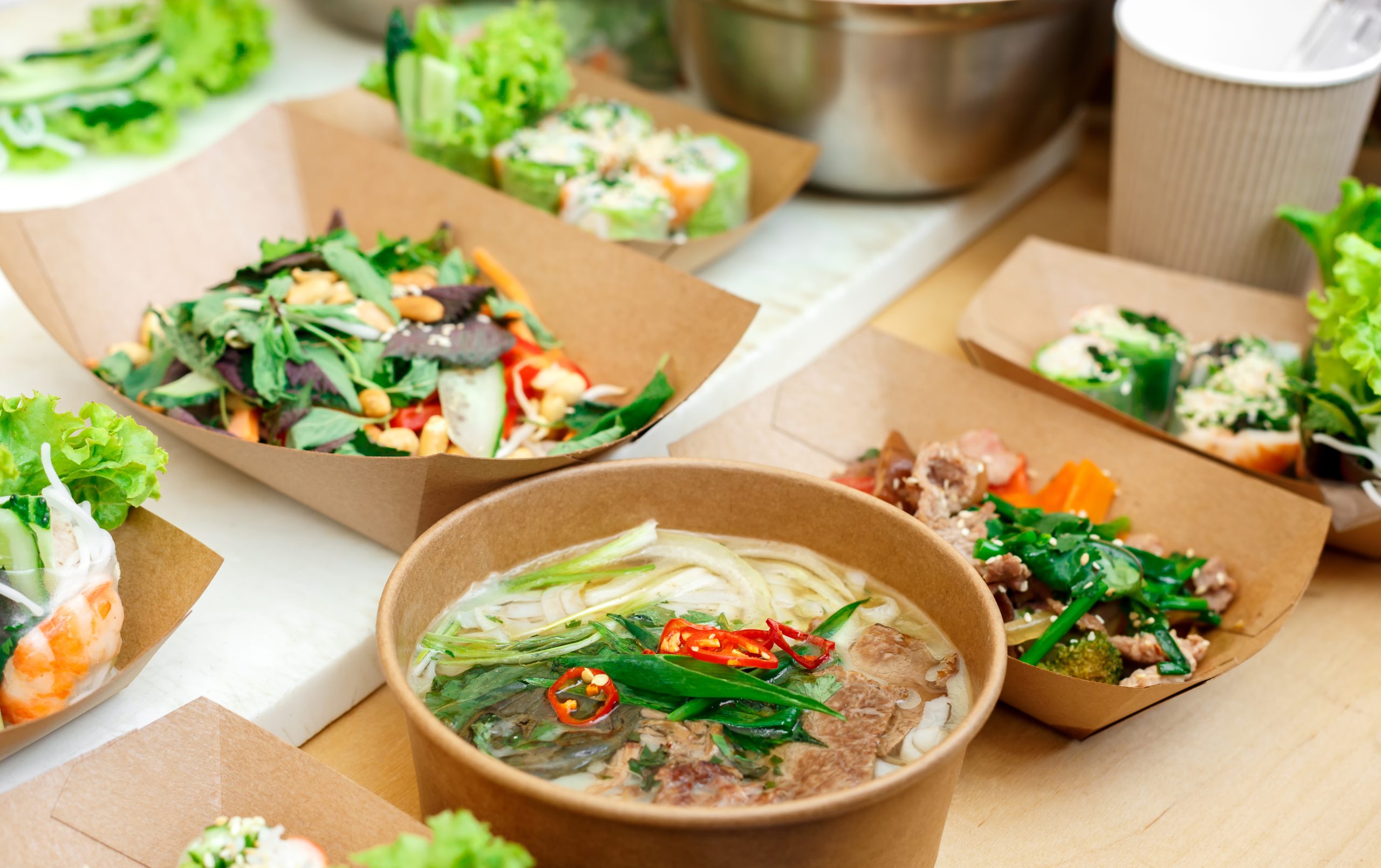
Match the container to the dish. Sauce-heavy pasta belongs in a deep kraft paper tub that holds heat and resists grease, while drier, tossed pasta and stir-fry portions travel better in a rigid cardboard box.
Deep kraft tubs are the workhorse for saucy pasta and use the same format as soup, which keeps your stock list short. Browse our pasta packaging to standardise on one tub across both. For carbonara, aglio e olio, stir-fried noodles, and anything with little standing liquid, cardboard noodle boxes hold shape and vent naturally through the fold.
Whichever format you choose, leave headroom. Filling a tub to the brim forces sauce against the lid, breaks the seal and causes spillage. Decide your portion size first, then pick a container that seals comfortably when full.
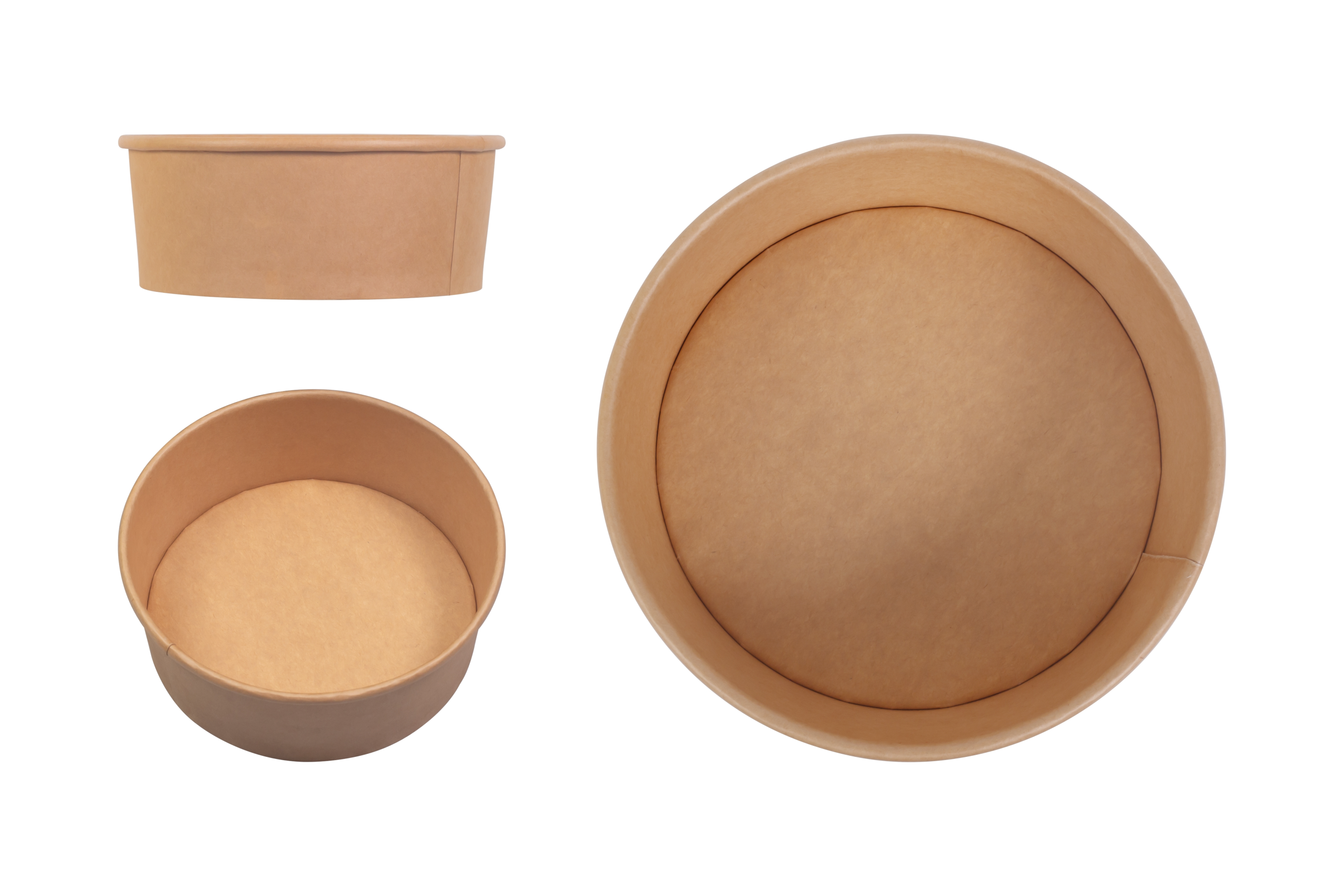
The best default container for takeaway soup is a kraft paper soup tub with a tight-fitting lid. It retains heat, stays sturdy when full of liquid, and is compostable, which makes it the standard choice for cafés and takeaways serving broths through to thick stews.
Lid fit is everything for liquid transit, so pair every tub with the lid made for that exact size rather than assuming a universal fit. A thinner broth needs a fully sealed lid, while a thick stew is more forgiving but still benefits from a secure closure. Stackable tubs are worth choosing where counter and storage space is tight behind the till.
The single biggest cause of leaks is a lid that does not match the base tub. To stop takeaway soup and pasta leaking, buy the tub and its matching lid together and confirm the size code lines up, rather than mixing lids across ranges.
Vented lids release steam and stop pressure building, while tight-fitting lids give the seal you need for transit. For the sauciest dishes, a polypropylene tub gives a stronger mechanical seal than a paper lid alone. One packing habit makes a measurable difference: keep every soup and pasta container upright in the delivery bag, ideally in a rigid base or divided carrier so nothing tips on a corner.
You can build a sustainable hot food spec without losing heat retention. Compostable kraft paper tubs cover soup and saucy pasta, recyclable aluminium handles stews and curries, and recyclable polypropylene suits reheatable meal-prep portions.
For dishes that need to be oven-safe, freezer-safe, or reheated, recyclable foil containers made from aluminium go into standard recycling. When you describe your packaging to customers, keep the claim tied to the product: say the tub is made from kraft paper or that the tray is recyclable aluminium, rather than a blanket statement. The CMA Green Claims Code requires environmental claims to be accurate and specific, so precise wording protects you as well as your buyer.
Size the container to the portion, not the other way round. As a working guide: 8oz and 12oz suit side soups and starters, 16oz covers a standard main soup portion, and 26oz to 32oz handles main pasta dishes and large soups.
For a main pasta dish, a 26oz to 32oz tub is the right choice. It holds a generous restaurant portion with the headroom the lid needs to seal, and it presents well when the customer opens it. Mapping two or three sizes across your menu keeps your packaging cost predictable and stops you overpaying to serve a small side in a large tub.
Ambican is a UK wholesale food packaging supplier based in Park Royal, London, and we stock the best takeaway containers for soup and pasta: kraft tubs, noodle boxes, foil containers and matching lids, so you can consolidate your soup and pasta packaging with the rest of your order. Free delivery applies on orders over £130 ex VAT, and we dispatch within 1 to 2 working days.
For bulk quantities or help matching lids to tubs, call us on 0208 965 8399.
A kraft paper soup tub with a tight-fitting lid is the best all-round container for takeaway soup. It retains heat, stays rigid when full of liquid and is compostable. Pair each tub with the lid designed for that exact size to keep it leak-proof in transit.
Not all kraft paper tubs are microwave-rated, so always check the individual product specification before microwaving. If you need a container customers can reheat, choose a recyclable polypropylene tub, which is designed for microwave use. Foil containers are oven-safe but must never go in a microwave.
A 26oz to 32oz tub is the right size for a main pasta dish. That capacity holds a full restaurant portion with enough headroom for the lid to seal without sauce forcing it open. Smaller 8oz to 12oz tubs suit side portions and starters.
Foil containers are better suited to stews, curries and reheatable meals than to thin soups, because their board or foil lids do not give the liquid-tight seal a broth needs. For soup delivery, a kraft or polypropylene tub with a matching sealed lid is the safer choice.
Yes. We supply tight-fitting and vented lids matched to our kraft and polypropylene tub sizes, which is what prevents leaks in the first place. Buying the tub and its matching lid together is the most reliable way to guarantee a spill-free order.