Latest News
Only 47% of plastic packaging in the UK is currently recycled, according to WRAP’s most recent figures. For food businesses, that statistic represents both a problem and an opportunity. The packaging you choose, and the way you communicate about it, directly shape whether your customers recycle, bin, or contaminate recycling streams with food waste.
This guide on how to encourage customers to recycle food packaging covers the practical steps UK food business owners can take to improve customer recycling behaviour, from on-pack labelling to material selection and in-store messaging.
Customer recycling behaviour has a direct impact on how your business is perceived. A 2023 Deloitte survey found that 64% of UK consumers have reduced purchases from brands they consider environmentally irresponsible. For takeaway restaurants, cafés, and food trucks, packaging is often the most visible part of the customer experience. If it ends up in general waste or causes confusion at the recycling bin, it reflects on your brand.
There is also a regulatory dimension. Extended producer responsibility (EPR) reforms are increasing financial obligations on businesses that produce or import packaging. Food businesses that reduce waste and improve recyclability will face lower costs and fewer compliance headaches over time. There is also a straightforward commercial argument: choosing genuinely recyclable takeaway packaging in the UK means that customers can process through kerbside collections can reduce trade waste collection costs for high-volume operations.
The single most effective step you can take is choosing materials your customers can actually recycle at home. Not all packaging labelled as “eco-friendly” is accepted in standard UK kerbside recycling. Your material choices need to align with what local councils collect.
Black plastic is a persistent problem. Many optical sorting machines at recycling facilities cannot detect black plastic, meaning it often ends up in landfills even when placed in recycling bins. Switching to clear or natural-coloured alternatives gives customers a better chance of recycling correctly.
Compostable packaging, including bagasse (sugarcane fibre) and PLA-lined board, needs industrial composting facilities rather than standard recycling bins. If your business uses compostable food packaging, communicating the correct disposal route clearly is essential. Putting compostable items into recycling bins contaminates the recycling stream.
The On-Pack Recycling Label (OPRL) scheme is the UK’s most widely recognised recycling labelling system, providing standardised labels telling consumers whether packaging is “Widely Recycled,” “Check Local Recycling,” or “Not Yet Recycled.” Over 700 brands and retailers use the system, and WRAP research shows 65% of UK shoppers look for recycling information on the pack.
For food businesses ordering custom branded packaging, including OPRL labels on cups, bags, and boxes, is one of the most effective ways to influence customer recycling behaviour. Ambican offers custom-branded packaging services, so incorporating OPRL symbols into your printed designs is straightforward.
If your volumes are too small to justify OPRL membership, clear text-based instructions work well. A simple “This cup is recyclable. Please recycle me.” message combined with the Mobius loop symbol gives customers the information they need.
Research from the Behavioural Insights Team shows that people are most responsive to prompts at the point of decision, which in a food business context means the moment they finish eating and look for a bin.
Place clear, visual signage above or on recycling bins showing which items go where. Use photographs of your actual packaging rather than generic recycling icons. A photo of the specific cup or container you use, with an arrow pointing to the correct bin, removes ambiguity. Use distinct colours for general waste, recycling, and compostable waste. The standard UK colour coding is blue for recycling, green for compostable waste, and black or grey for general waste. Small tent cards or counter-top signs with brief, specific recycling messages reinforce on-pack instructions at the point of disposal.
When customers take food away, you lose control of the disposal environment, making on-pack messaging even more critical. Print recycling instructions directly on bags and boxes. Include a small, printed insert or sticker with delivery orders explaining how to recycle each component, particularly useful if the order contains a mix of materials. Use social media and order confirmation emails to reinforce recycling messages. A brief note, such as “All our packaging is recyclable at kerbside. Here’s how to dispose of it correctly”, takes seconds to add to an automated email.
Staff are the human connection between your business and your customers. When a team member hands over a takeaway order and says, “Everything in there is recyclable, just pop it in your home recycling,” it registers more than any printed label. Brief, consistent communication from staff reinforces the message without being preachy.
Practical steps include ensuring every team member knows what your packaging is made from and how it should be disposed of. Give staff a simple one-line prompt for the point of handover, such as “Just so you know, all our packaging goes in your normal recycling.” Train staff to monitor in-store recycling bins and remove contamination, as contaminated recycling bins are a common reason entire loads get rejected by waste processors. Include packaging and recycling information in your onboarding process so every new hire understands your approach from day one.
One underappreciated tactic for improving customer recycling rates is simplifying your packaging range. If you use five different materials across your menu, customers face five different disposal decisions. Rationalising your packaging to fewer materials, ideally all recyclable through kerbside collections, removes complexity and increases the chance that customers dispose of it correctly.
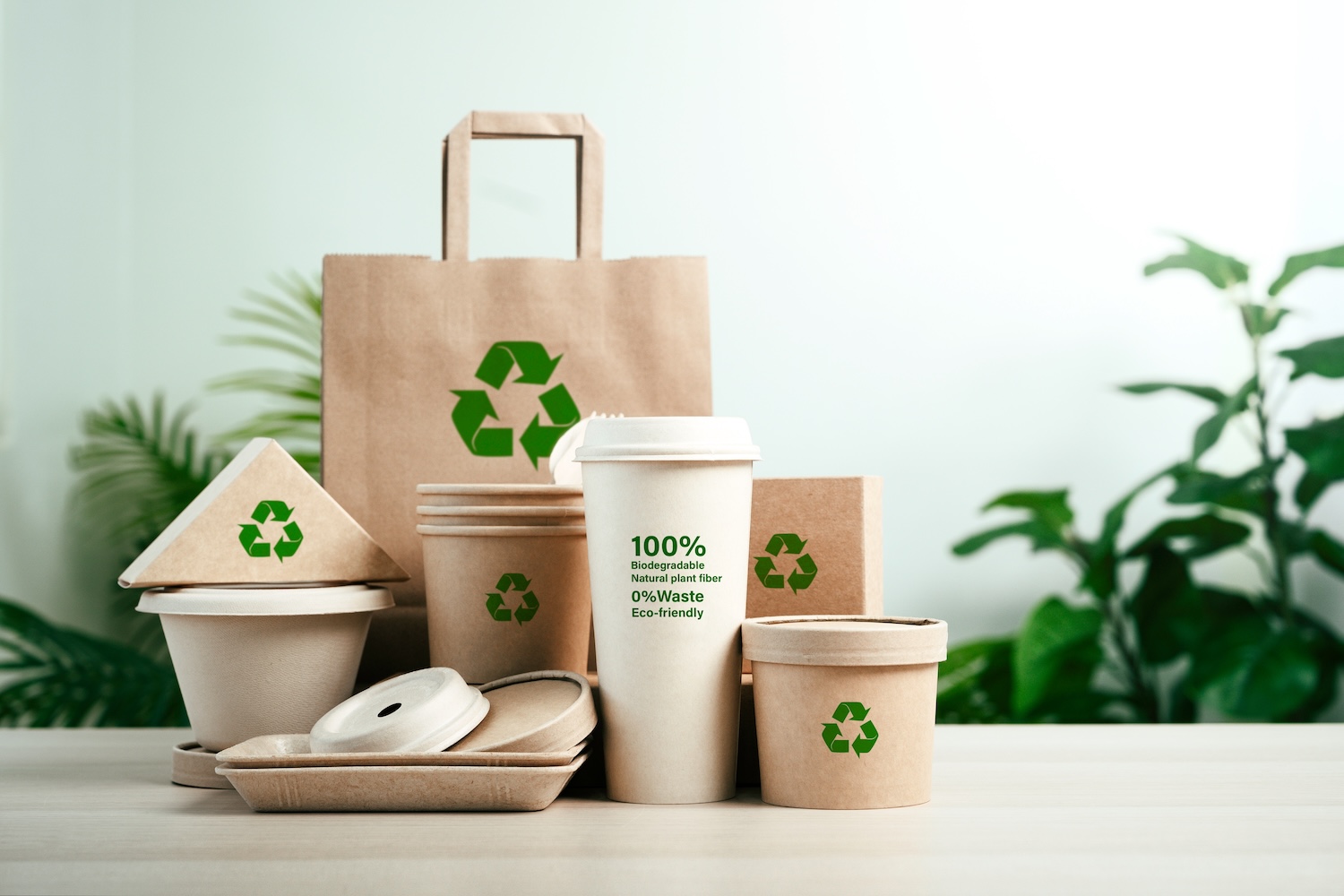
A café using Kraft cardboard food boxes, paper bags, and clear PET cups has a packaging range entirely recyclable at the kerbside. A customer finishing their meal can put everything in one recycling bin without second-guessing. Compare that with a business using a mix of polystyrene, black plastic, compostable containers, and paper, where the customer must make a different decision for each item.
When reviewing your packaging range, ask a straightforward question for each item: Can my customer recycle this at home through their normal kerbside collection? If the answer is no, consider whether an alternative exists that maintains food safety and presentation standards while being easier to recycle.
A 2024 Food Standards Agency study found that packaging sustainability is now the third most important factor UK consumers consider when choosing a food-to-go outlet, behind price and food quality. Businesses that use visibly recyclable packaging and communicate their approach clearly benefit from positive customer sentiment without expensive marketing campaigns.
The keyword is “visibly.” A plain brown kraft box with a clear “Widely Recycled” label communicates sustainability more effectively than an unmarked container made from an advanced eco-material the customer does not recognise. Pairing recyclable materials with clear on-pack instructions is more effective than simply switching to a new material and hoping customers notice. The combination of the right material and the right message drives both environmental outcomes and commercial returns.
Encouraging customers to recycle starts with giving them packaging that is genuinely recyclable and clearly labelled. The tactics covered in this guide, from OPRL labels to staff training to bin signage, all work best when the foundation is right: packaging materials that UK recycling infrastructure can actually process.
Browse Ambican’s range of recyclable and compostable packaging for your food business. From recyclable plastic cups and paper takeaway bags to compostable food packaging, you will find options designed for UK food businesses that want to make recycling straightforward for their customers. Free delivery is available on orders over £130 excluding VAT, with dispatch in one to two working days.