Latest News
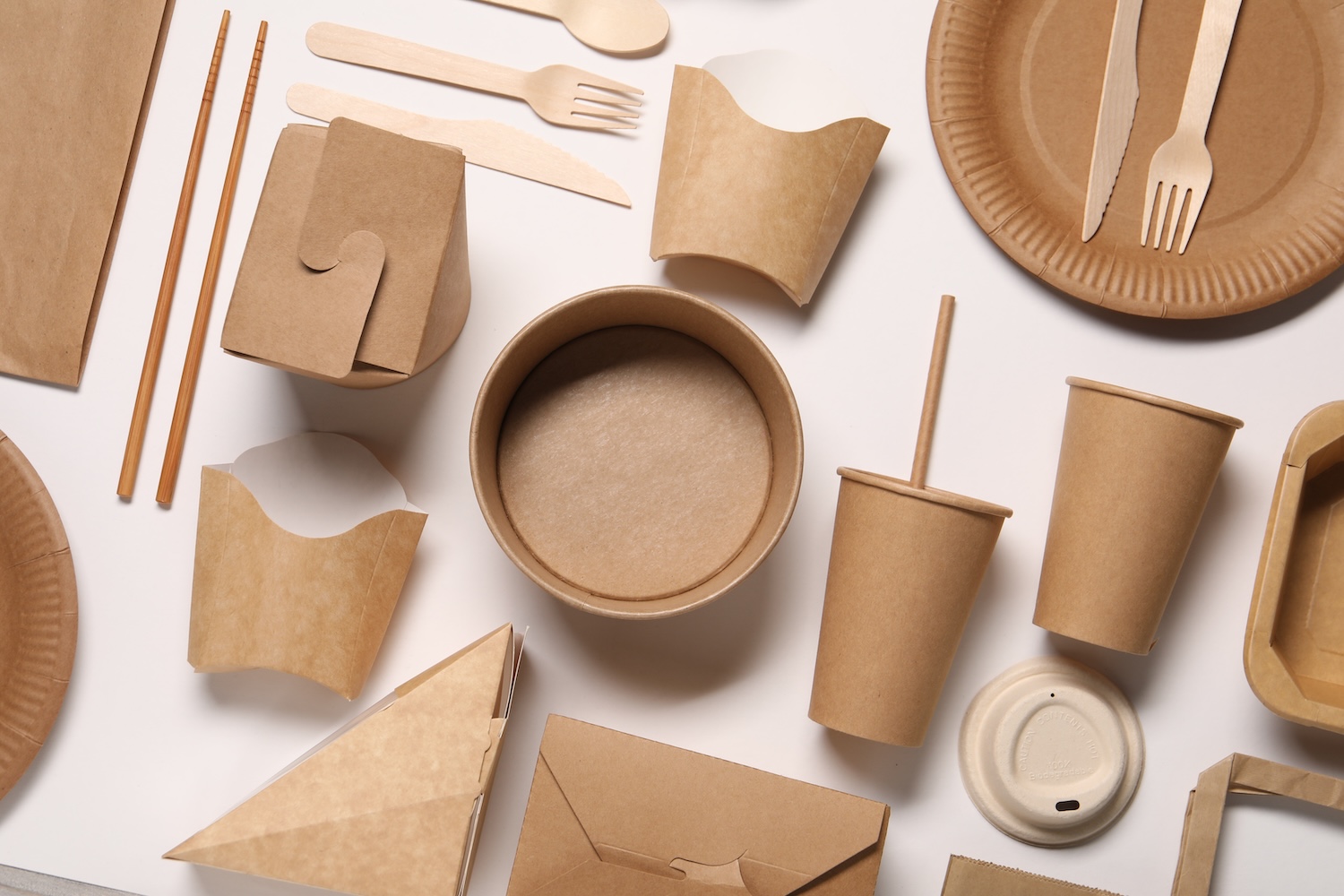
Every food business in the UK uses packaging. Whether you run a takeaway, café, catering operation, or food truck, the containers, cups, bags, and boxes you choose carry an environmental footprint that extends far beyond the moment a customer walks out the door. But how do you actually measure that footprint, and how do you compare one packaging option against another in a way that is practical, honest, and commercially sound?
This guide walks through the process of how to measure the environmental impact of your packaging choices, covering the frameworks, metrics, and real-world criteria that UK food business owners and procurement managers can use to evaluate their sustainable packaging choices with confidence.
The environmental impact of packaging refers to the total burden a packaging product places on natural systems across its entire existence, from raw material extraction through to final disposal or recovery. This includes carbon emissions, water use, energy consumption, land use, pollution, and waste generation at every stage.
For a food business, this matters because packaging decisions affect your carbon footprint, your regulatory obligations, and your reputation with environmentally aware customers. The challenge is that environmental impact is not a single number. It is a collection of factors, and understanding how to weigh them is the first step toward making genuinely lower-impact choices.
A lifecycle assessment (LCA) is the internationally recognised method for measuring the environmental impact of a product from start to finish. Governed by ISO 14040 and ISO 14044 standards, an LCA examines raw material sourcing, manufacturing processes, transportation, use, and end-of-life treatment across four stages:
Full LCAs are typically conducted by specialist consultants and can cost thousands of pounds. For most independent food businesses, commissioning your own LCA is not realistic. However, understanding the framework helps you ask the right questions of your packaging suppliers and interpret the environmental claims you encounter in the market.
If a formal LCA is out of reach, apply the same thinking in a simplified way. Ask suppliers about the origin of raw materials, the energy intensity of manufacturing, the distance products travel to reach you, and what happens to the packaging at the end of life. Suppliers who answer these questions clearly are more likely to offer genuinely lower-impact products.
When going over the packaging environmental impact assessment of your food business, five factors carry the most weight.
The environmental cost starts before a packaging product is manufactured. Virgin plastic is derived from fossil fuels. Sugarcane fibre, used in bagasse packaging, is a byproduct of sugar production, meaning the raw material is repurposed agricultural waste rather than a primary extraction product. Using waste-stream materials typically carries a lower upstream environmental burden than extracting virgin resources. Products made from FSC-certified paper, recycled card, or agricultural byproducts like sugarcane bagasse generally score better at this stage.
Energy consumed during manufacturing varies significantly between packaging types. Moulding bagasse fibre into food containers typically requires less energy than producing equivalent plastic containers from raw petrochemical feedstocks. Ask suppliers whether their manufacturing facilities use renewable energy and whether they hold environmental management certifications such as ISO 14001.
Packaging shipped from East Asia carries a substantial transport footprint. A product manufactured closer to your business will generally have lower transport emissions. Ambican supplies from its base in Park Royal, London, with one to two working day delivery across the UK, meaning shorter last-mile logistics compared with direct overseas imports. Factor in where products are manufactured and warehoused, not just where the company is based.
Packaging that fails during use results in food waste, which carries its own significant environmental impact. WRAP estimates that the UK generates around 9.5 million tonnes of food waste annually, and inadequate packaging is a contributing factor. A slightly heavier container that prevents food waste may have a lower overall impact than a lightweight alternative that leads to spoilage. Choosing packaging that performs its primary function well is itself an environmental decision.
End-of-life treatment is where many packaging comparisons diverge sharply. In the UK, local authority recycling infrastructure varies widely, meaning a product labelled as “recyclable” may not actually be recycled in practice if the relevant collection does not exist in your area. Compostable food packaging offers an alternative pathway. Products certified to EN 13432 break down in industrial composting facilities within 12 weeks, returning to organic matter without leaving harmful residues, which is particularly relevant for food-contaminated packaging that is often rejected by recycling facilities.
Beyond the lifecycle stages, several practical criteria can be applied during any eco-friendly packaging evaluation without specialist expertise.
Check whether the packaging material is widely accepted for recycling in the UK. Clear PET plastic is widely recycled, but black plastic is often undetectable by sorting equipment. Plastic-lined paper cups require specialist processing. The On-Pack Recycling Label (OPRL) system provides a standardised guide, rating products as “Widely Recycled,” “Check Locally,” or “Not Yet Recycled.”
If a product claims to be compostable, look for EN 13432 or ASTM D6400 certification. Products without these certifications may not perform as claimed. Ambican’s compostable range is designed for food service operators who want a verified end-of-life pathway for their packaging.
Prefer materials sourced from renewable or waste-stream origins. Bagasse, kraft paper from sustainably managed forests, and PLA (polylactic acid derived from plant starch) all represent alternatives to fossil-fuel-based plastics. Each has trade-offs, but starting from a renewable base reduces dependency on finite petrochemical resources.
Lighter packaging generally requires less energy to produce and transport, but this must be balanced against functional performance. The goal is appropriate material use, not simply the lightest option available.
Two regulatory developments are particularly relevant for UK food businesses evaluating their sustainable packaging choices.
The UK’s reformed EPR scheme, which began phased implementation from 2024, shifts the financial cost of managing packaging waste from local authorities to the businesses that produce and import packaged goods. Businesses handling above a certain tonnage threshold must report on the packaging they place on the market and pay fees reflecting the real cost of collection, sorting, and recycling or disposal. Packaging that is difficult to process at the end of life will attract higher fees under the modulated fee structure, creating a direct financial incentive to choose materials that are easier and cheaper to recycle or compost.
The CMA’s Green Claims Code sets out six principles businesses must follow when making environmental claims. Claims must be truthful, accurate, clear, unambiguous, substantiated, and must not omit important information. For food businesses, this means you cannot label packaging as “eco” or “green” without verifiable facts to support the claim. If you state your takeaway boxes are compostable, you need evidence of certification. Working with suppliers who provide clear, specific environmental information, rather than vague green marketing language, helps you stay on the right side of these requirements.
You do not need expensive software to start evaluating your packaging. Rate each option across these criteria on a scale of one to five:
This approach gives you a comparative framework grounded in lifecycle thinking without requiring a formal LCA, and creates a documented rationale for your procurement decisions as customers and regulators increasingly expect transparency.
The goal is not perfection but informed, incremental improvement. Start with your highest-volume packaging items, as these represent the biggest opportunity for impact reduction, and evaluate them against the criteria above.
Ambican’s range of eco-friendly packaging includes compostable containers, bagasse products made from sugarcane fibre, and recyclable options across cups, boxes, trays, and bags. The best choices work across all dimensions: functional, commercial, regulatory, and environmental.
Explore Ambican’s full collection at ambican.com or call 0208 965 8399 to discuss bulk orders and find the right packaging for your food business. Free delivery is available on all orders over £130 excluding VAT, with one to two working day dispatch across the UK.