Latest News
Mulled wine and mulled cider are what people picture when they think of a winter market or a festive pop-up bar, but the cup it arrives in rarely gets the same thought as the drink itself. These are hot drinks served in cold, outdoor conditions, poured in smaller measures than a standard coffee, and handed over fast across a busy counter, so the usual café stock does not always carry over well to a seasonal pitch.
This guide looks at what actually makes a cup work for mulled drinks, from insulation and sizing through to lids and eco-friendly options.
We supply cups, lids, and sleeves to stall holders, pop-up bars, and event caterers across the UK, and the same questions come up every year as businesses get their hot drinks packaging ready for autumn and winter.
Mulled drinks are usually served hotter than brewed coffee and handed over in colder conditions, which puts more demand on the cup wall. A thin single-wall cup loses heat quickly on an exposed pitch and gets uncomfortable to hold, particularly for customers wearing gloves. Portion size is the second difference: a standard mulled wine or cider measure sits in the 6oz to 10oz range, against 12oz to 16oz for a coffee menu. Oversizing makes a correct measure look mean in the hand and raises unit cost for no benefit.
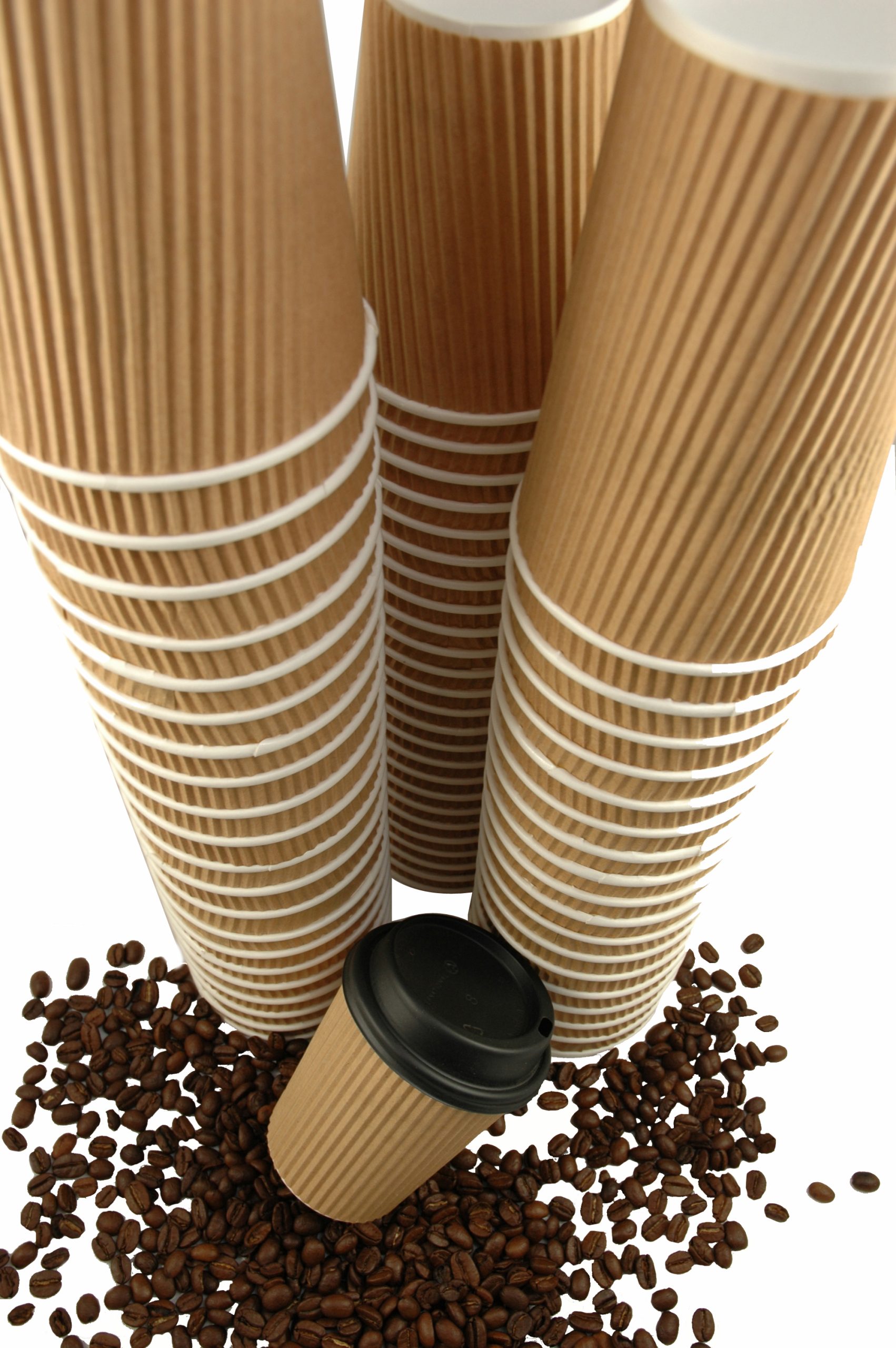
For most outdoor mulled wine service, ripple wall cups are the strongest default: the insulated outer layer means no separate sleeve is needed, the cup stays comfortable to hold in the cold, and there is one component per serve instead of two.
Single-wall cups with a sleeve cost less per unit and suit high-volume events where budget leads the decision. Double-wall cups sit between the two, with a smooth outer surface that prints cleanly.
All three sit within our hot drink cups range, so you can compare constructions in one place.
Our ripple cups have a corrugated outer wall bonded to the cup body, which traps a layer of air and keeps the outside cooler than the drink inside. For a market stall, the practical gain is speed: one item comes off the stack, gets filled, and goes over the counter, with no sleeve to fit and no second line of stock to keep topped up.
Single-wall cups are the cheapest per unit and work well for large events with a tight packaging budget, particularly indoor venues where heat loss matters less. The trade-off is handling: every serve becomes a two-part job, and you carry two product lines rather than one. If you are weighing this against the insulated options above, our ripple vs single-wall cups comparison breaks down the cost and handling differences in more detail.
Double-wall cups give you an insulated cup with a flat, smooth outer surface, which is the best base for printed artwork. For a festive pop-up bar where the cup appears in photographs and social posts, the cleaner print surface is worth the small premium. Our 12-oz double-walled cups are a popular starting point for this kind of seasonal branded run.
8oz is the most common size for a standard mulled wine or mulled cider portion, and the safest choice to standardise on for a market stall. 10oz leaves headroom for garnishes such as orange slices, cinnamon sticks, or star anise, suiting a more generous serve, while 12oz works better for hot chocolate with cream and toppings or for larger portions at premium events. Settling on one or two sizes keeps lid matching simple and cuts the stock you need to hold behind the counter.
If you want a closer look at sizing across the wider cup range, our coffee cup sizes guide covers it in more detail.
Quick tip: Check your cup size against your actual pour measure before you order, not after the pallet arrives. A 125ml measure in a 10oz cup looks half empty, and customers notice.
Sip-through lids are essential wherever customers carry drinks away from the stall, which covers almost all market, festival, and outdoor bar service, and a lid slows heat loss while the drink is being walked around a site. The detail that catches operators out is compatibility: lids are matched by cup rim diameter, not by the stated oz capacity, so two cups both labelled 8oz can take different lids. Confirm the diameter on both before you order. Cup carriers help when groups buy 2 or more drinks at once.
PLA-lined compostable cups use a plant-based lining in place of a conventional plastic coating, and they pair with compostable lids so the stall runs a single disposal route rather than a mixed bin. That matters where a market operator or local authority sets waste conditions in the pitch agreement. Treat the cup, lid, and sleeve as one system and choose them together. Keep any claims you make to customers tied to the specific material, as required by the CMA Green Claims Code.
Seasonal trading concentrates footfall over a few weeks, so a printed cup is seen by far more people per trading hour than at any other time of year. Our custom-branded cups put your logo and seasonal artwork directly on the cup itself, and a consistent design across cups, sleeves, and bags builds recognition for a pop-up bar that moves between pitches.
Note: Print turnaround and order minimums vary by design, so get in touch with our team directly to confirm timings for your event.
Get your mulled wine cups, lids, and sleeves on the stall before the first trading day. Work back from your opening date and place the order with room to spare, especially if printed cups are involved. Consolidating cups, lids, sleeves, and the rest of your stall packaging into one order is the simplest way to clear the £130 ex VAT free delivery threshold, and we ship across the UK in 1 to 2 working days from our Park Royal base in London. Call us to put together a seasonal order or to price up custom printed cups for your event.
Yes, paper hot drink cups rated for hot service are suitable for mulled wine and mulled cider. Because mulled drinks are served hotter than coffee and are usually served outdoors, we recommend an insulated ripple or double-walled cup rather than a plain single-walled cup on its own.
No. The corrugated outer wall provides the insulation a sleeve would otherwise add, so there is nothing extra to fit. That removes a component from every serve and speeds up handling at a busy counter.
No. Lids are matched by rim diameter rather than the oz capacity printed on the cup, so two cups of the same stated size may need different lids. Check the diameter against both the cup and the lid, or order them together so we can confirm the match.
PLA-lined cups feature a plant-based lining instead of a conventional plastic coating and are supplied as compostable products. Disposal depends on the facilities available at your site or venue, so check what your waste contractor or market operator accepts.
Yes. Cups, lids, sleeves, and any other packaging count towards the same order total, and delivery is free on orders over £130 ex VAT. For larger seasonal quantities, call us.