Latest News
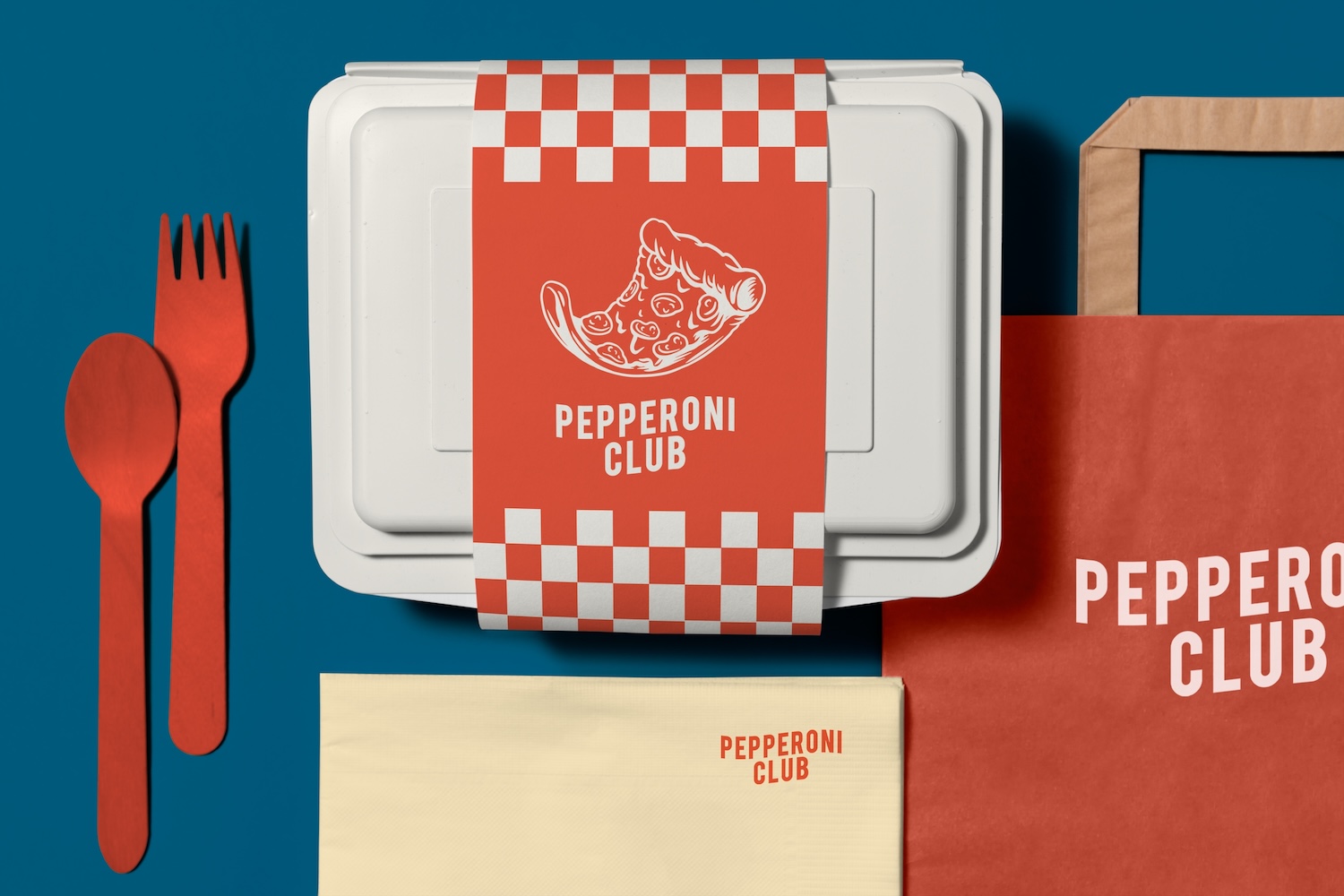
Before a customer takes a single bite, they have already formed an opinion about your food business. That opinion is shaped almost entirely by what they see and touch first: your packaging. For takeaways, cafés, food trucks, and delis across the UK, packaging is not simply a vessel for transporting food. It is the single most frequent physical interaction a customer has with your brand, and for delivery and collection orders, it may be the only one.
The role of packaging in food branding goes far beyond logos and colour schemes. It communicates quality, professionalism, and attention to detail, and it builds or erodes food packaging and consumer trust with every single order.
Research published in the Journal of Business Research found that consumers form quality judgements about food products within seconds of seeing their packaging, often before any sensory experience with the food itself. This means your packaging is performing a branding job every time it reaches a customer’s hands, doorstep, or desk.
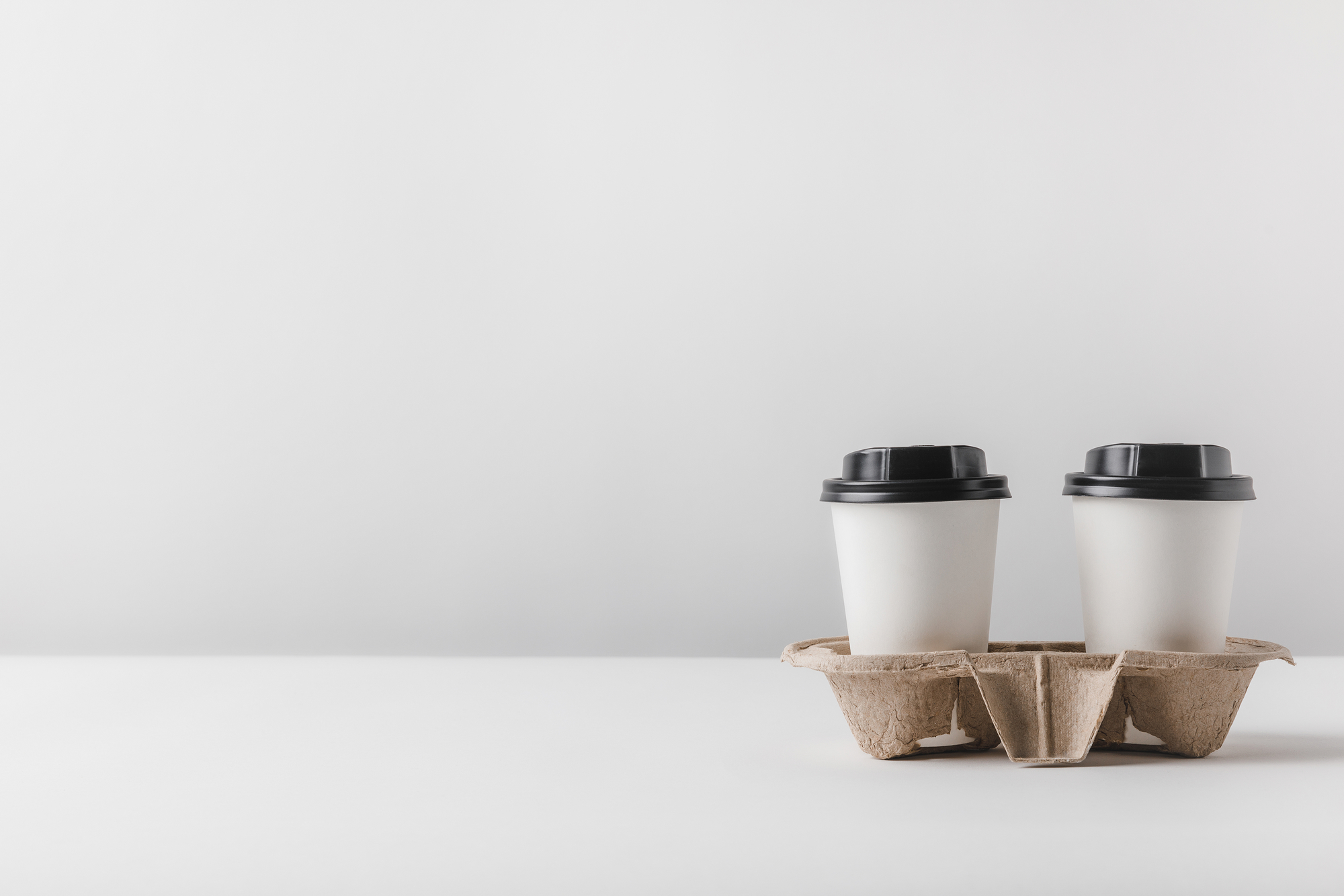
Consider a customer ordering coffee from two different cafés. One arrives in a plain white cup with no branding. The other arrives in a well-designed cup featuring a clean logo, complementary colours, and a tactile finish. The coffee inside could be identical, but the customer’s perception of value and professionalism will differ significantly. This is how packaging affects brand perception at the most fundamental level.
First impressions through packaging work on three dimensions simultaneously:
For food businesses serving delivery and collection orders, where there is no face-to-face interaction, packaging is your shopfront, your staff uniform, and your handshake rolled into one.
Brand recognition depends on repetition. When a customer sees the same colours, logo, and design language across your cups, bags, and containers, that visual consistency builds familiarity, and familiarity breeds trust. According to a 2021 Lucidpress report, consistent brand presentation across all touchpoints can increase revenue by up to 23%.
For food businesses, consistency means ensuring that every item a customer receives tells a coherent brand story. A café serving speciality coffee in beautifully branded cups but handing them over in plain, unbranded bags is sending a mixed message. This is where a considered food packaging branding strategy becomes commercially valuable. Mapping out every packaging touchpoint in a typical order and ensuring each one carries your brand identity creates a cumulative effect that translates into recognition, recall, and preference.
A standard takeaway or delivery order might include five or more separate packaging items: a main food container, a lid, a bag, a napkin, and a drinks cup. Each one is a branding opportunity. When all five carry consistent branding, the customer receives a cohesive experience. When none do, your business becomes visually anonymous and forgettable.
Ambican’s branded food packaging service allows UK food businesses to apply their logo and brand design across multiple product types, creating consistency without needing to source from several different suppliers.
There is a well-documented psychological principle at work when customers assess food packaging: they use it as a proxy for the quality of what is inside. A 2019 Ipsos study found that 72% of consumers said packaging design influences their purchasing decisions, with a significant portion associating premium packaging with premium product quality.
If a customer opens a delivery bag to find a flimsy container that has leaked, warped, or collapsed, their confidence in the food itself drops before they have tasted anything. Conversely, a sturdy, well-designed container that has kept food secure and at the right temperature reinforces the perception that this is a business that takes quality seriously at every level.
The difference in unit cost between a basic unbranded container and a well-constructed branded alternative is typically pennies, but the difference in perceived value to the customer can be significant. Packaging procurement is not purely a cost decision. It is a brand investment.
The materials you choose also communicate your brand values. Kraft paper bags and containers made from sugarcane fibre (bagasse) carry associations with quality and care that smooth white polystyrene does not. Many UK consumers now actively notice and appreciate packaging that looks and feels more considered, particularly in the café, deli, and artisan food segments. A juice bar and a fish and chip shop may both benefit from branded packaging, but the material choices and design language should reflect their distinct brand identities.
One of the most cost-effective marketing channels available to a food business is the packaging it already buys. Unlike paid advertising or social media campaigns, branded takeaway packaging UK businesses use reaches customers at the exact moment of consumption, when engagement with your brand is highest.
A branded coffee cup carried through a busy high street is a mobile advert. A branded paper bag on a colleague’s desk prompts the question: “Where did you get that from?” According to a 2020 British Takeaway Campaign survey, over 60% of UK consumers order takeaway at least once a week, meaning branded packaging generates repeated impressions at scale.
Custom-branded cups are among the highest-visibility packaging items any food business uses. They are carried in public, placed on desks, and frequently photographed. Ambican’s branded cups are available in multiple sizes from 8oz to 16oz with full-colour logo printing. For a busy café serving 200 coffees a day, that is 200 branded items leaving the premises daily, each potentially seen by dozens of people. The cost per impression is a fraction of what you would pay for digital or print advertising.
Branded paper bags serve a similar function for takeaway, deli, and bakery businesses. They are the outermost layer of the customer experience and immediately distinguish your order from competitors, particularly on delivery platforms where multiple restaurants may be delivering to the same area. A sealed, branded bag also reassures delivery customers that their order has not been tampered with in transit, an increasingly important concern for consumers using third-party delivery services.
A strong food packaging branding strategy accounts for the specific operational context of each business type.
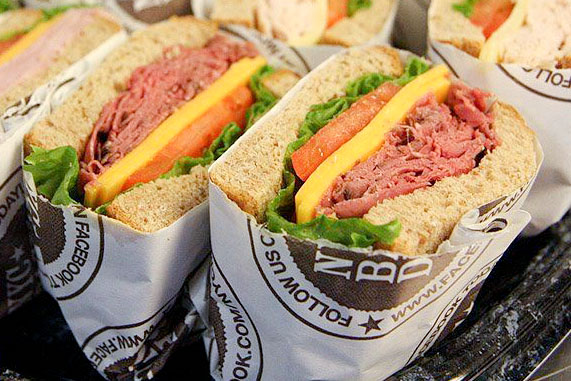
Hot and cold cups are the primary branding opportunity. Prioritise custom-branded cups in the sizes you use most frequently. Paper bags for pastries and sandwiches should match the cup design, with branded napkins and cup sleeves as secondary touchpoints.
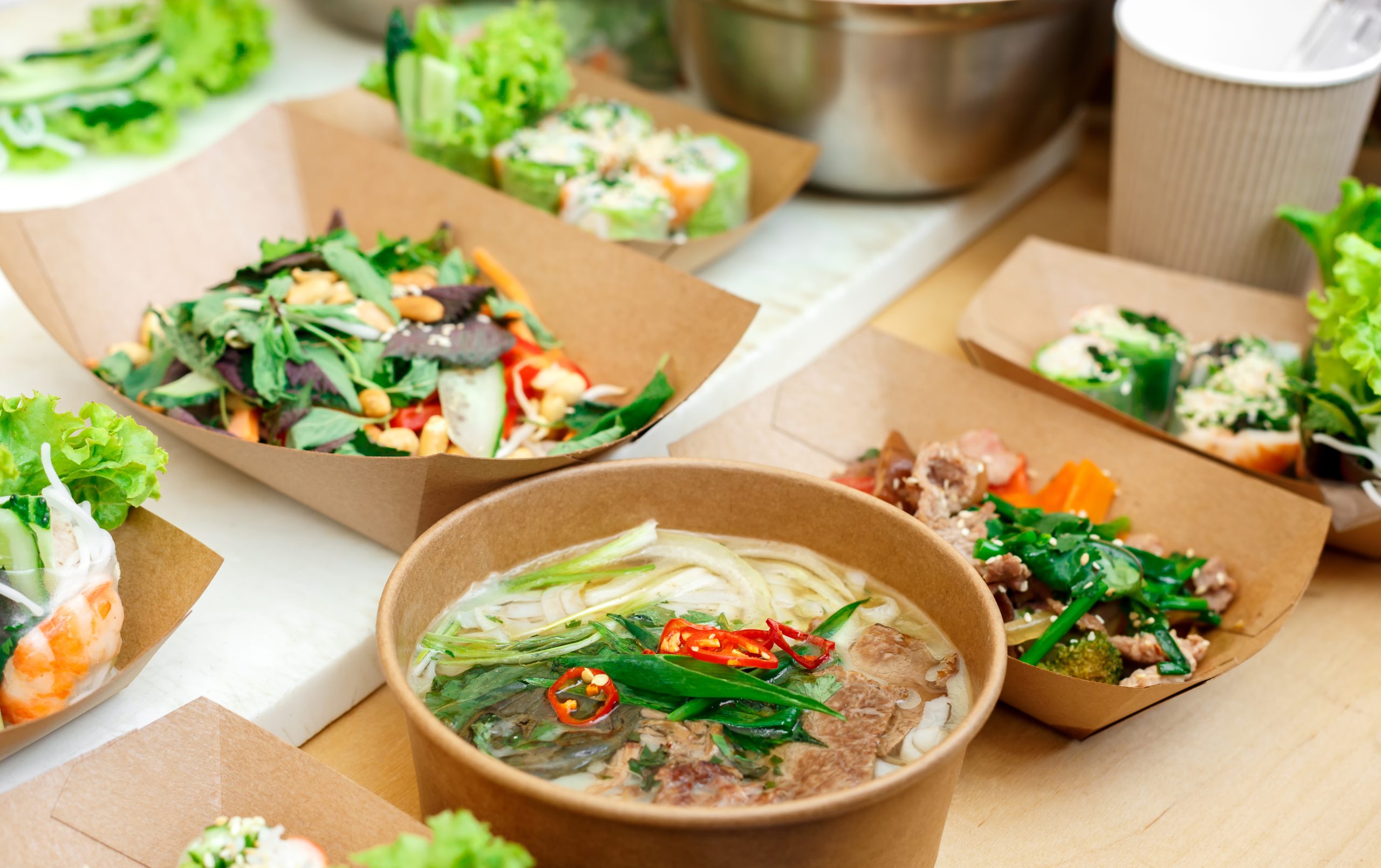
Food containers, bags, and lids are the core touchpoints. Choose containers that maintain food temperature and structural integrity during delivery, as these directly affect how customers perceive your food quality. Think about how your packaging looks when photographed, as customers increasingly share delivery experiences on social media.
Packaging needs to work harder because customers may be encountering your brand for the first time at a market or festival with no permanent location to return to. Bold, distinctive branding on containers and bags helps customers remember and search for your business online. Include your social media handle or website on packaging to convert a one-off purchase into a repeat customer.
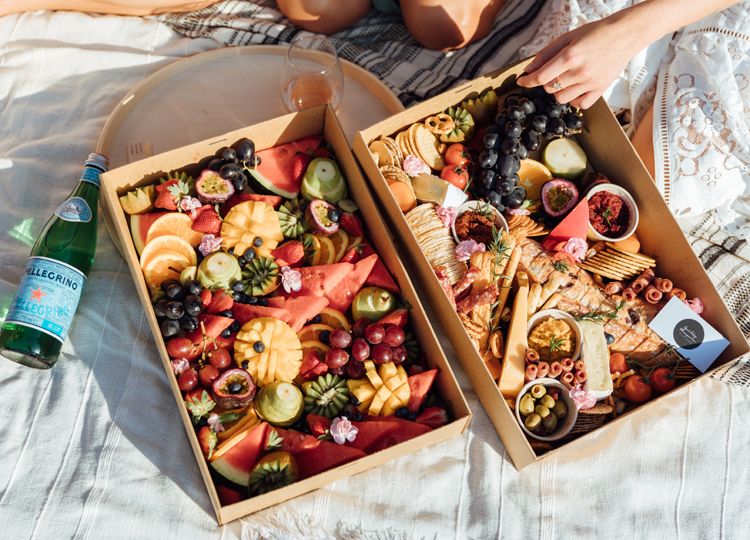
The challenge is maintaining brand consistency across a wide range of formats: sandwich bags, deli pots, salad boxes, and paper bags. Choose a core colour palette and logo placement that works across different packaging shapes and sizes.
Cake boxes, branded cups, and deli pots are key formats. These businesses often rely heavily on visual appeal and social media sharing, so packaging that photographs well is commercially important. Clean, professional branding elevates a home bakery to a recognisable brand and gives established bakeries a premium edge over competitors using generic packaging.
The evidence consistently shows that branded packaging drives measurable commercial returns: higher perceived value, increased repeat orders, free marketing impressions in public spaces, organic social media amplification, and competitive differentiation on delivery platforms where customers choose between dozens of similar options.
The cost difference between unbranded and branded packaging is modest on a per-unit basis, particularly when ordering in volume. For most food businesses, the return in brand building, customer retention, and organic marketing far outweighs the additional spend.
Transitioning to branded packaging does not need to happen all at once. Start with the highest-visibility items, typically cups and bags, and expand to containers and napkins as your brand identity matures. Ambican works with food businesses across the UK to produce custom-branded packaging, with orders over £130 excluding VAT qualifying for free delivery and dispatch in one to two working days for stock items.
Your packaging is already a cost you carry. The question is whether that cost is also working as a brand investment. For most food businesses, the answer should be yes.
Visit ambican.com/branding to explore the full range of cups, bags, and containers available with your logo and branding, or call 0208 965 8399 to discuss a bulk branded packaging order tailored to your business.