Latest News
Understanding how to dispose of compostable packaging correctly is essential for reducing waste and ensuring compostable materials deliver genuine environmental benefits. Compostable food packaging is designed to break down under controlled conditions, but without the right disposal processes, it can contribute to landfill waste rather than supporting sustainability goals.
For UK businesses operating in the food sector, disposal practices sit at the heart of food packaging waste management. Choosing compostable materials is only effective when paired with clear disposal guidance, appropriate waste contracts, and consistent staff training. When handled correctly, compostable materials support the sustainable disposal of food packaging and help reduce environmental impact across operations.
Food packaging waste management plays a critical role in how food service packaging is selected, used, and disposed of across cafés, takeaways, restaurants, and catering operations. Packaging in food service environments is more likely to become contaminated with food, which limits recycling options and increases the risk of incorrect disposal.
Without a clear strategy, even compostable or recyclable materials can end up in general waste. Effective food packaging waste management ensures packaging materials align with real-world waste infrastructure, making disposal simpler, more consistent, and more environmentally responsible.
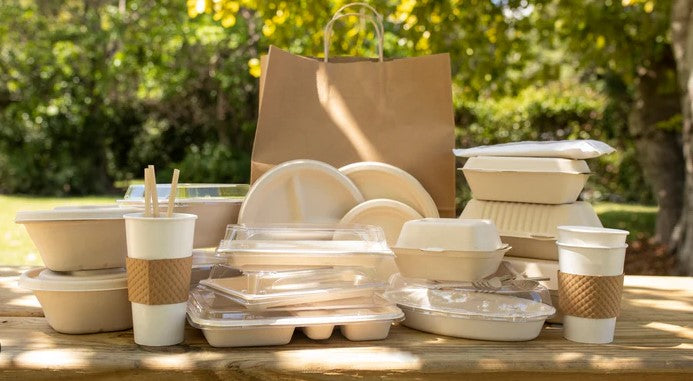
Compostable food packaging is made from plant-based or renewable materials that are designed to break down into organic matter under composting conditions. Unlike conventional plastics, compostable materials are intended to decompose without leaving harmful residues when processed correctly.
From a practical perspective, compostable packaging must be matched to the correct disposal route. Industrially compostable materials require access to industrial composting facilities, while home compostable materials rely on suitable domestic composting systems. Understanding these differences is essential for the proper disposal of compostable food packaging.
Businesses exploring eco-friendly food packaging often choose compostable options to reduce reliance on fossil-based materials, but disposal planning must come first.
Incorrect disposal is one of the most common challenges facing compostable packaging adoption. Compostable items placed in recycling bins can contaminate recycling streams, while materials sent to landfills cannot break down as intended.
Clear guidance on how to dispose of compostable packaging helps businesses reduce contamination, improve compliance with UK waste regulations, and support more effective food packaging waste management. Proper disposal ensures compostable materials deliver measurable environmental benefits rather than becoming unnecessary waste.
When compostable packaging is disposed of incorrectly, its environmental advantages are lost. Materials sent to landfill may degrade slowly in low oxygen conditions, while compostable packaging placed in recycling streams can disrupt processing and cause entire loads to be rejected.
By contrast, the sustainable disposal of food packaging through composting allows materials to return nutrients to the soil. This reduces landfill use and supports a more circular approach to packaging waste management.
Applying clear compostable packaging tips helps businesses improve disposal outcomes across food service environments. Packaging should always be checked for certification logos that confirm whether it is suitable for industrial or home composting.
Clear bin signage, staff training, and consistent waste separation all help reduce contamination. Avoid mixing compostable materials with recycling or general waste, and ensure food waste and packaging waste streams are clearly defined. These steps strengthen food packaging waste management and improve composting efficiency.
Choosing between recycling and composting depends on the packaging material, how contaminated it is with food, and what waste facilities are available locally. While both options play an important role in food packaging waste management, they require different handling to be effective. Understanding when packaging should be recycled and when it should be composted helps reduce contamination, improve disposal accuracy, and support the sustainable disposal of food packaging.
Some food packaging materials can be recycled when clean and free from heavy food residue. Cardboard containers and paper-based items are commonly accepted through UK recycling collections when disposed of correctly.
Food contamination remains a key barrier. Heavily soiled packaging often cannot be recycled, even if the base material is recyclable. Using clearly labelled items such as hot drink cups designed to align with UK recycling systems can help reduce confusion and improve recycling accuracy.
Compostable packaging should never be placed in recycling bins. Certified compostable packaging must be sent to composting facilities where controlled conditions allow materials to break down safely.
Using compostable food packaging supports responsible waste handling, but only when suitable disposal routes are in place. Certification assures that materials meet recognised standards and can be processed correctly.
Food waste and packaging waste often overlap in food service environments. Organic waste, such as food scraps, can be collected separately and processed through composting or anaerobic digestion.
When compostable packaging is paired with food waste collection, it supports a more integrated approach to food packaging waste management. Clear compostable packaging tips help prevent contamination and improve separation accuracy.
Traditional plastic packaging has historically been used across food service due to its durability and low cost. However, once contaminated with food, traditional plastic packaging is rarely recycled and often ends up in a landfill.
Compostable alternatives offer a more sustainable option when disposal is planned correctly. Moving away from traditional plastic packaging reduces long-term environmental impact and supports the sustainable disposal of food packaging when composting infrastructure is available.
Fruit and veg bags are widely used in food retail and takeaway environments, yet they are frequently mis disposed of. Lightweight plastic fruit and veg bags often contaminate recycling streams, while compostable versions must be handled carefully to ensure correct processing.
Including fruit and veg bags within wider food packaging waste management planning helps businesses reduce contamination and improve waste sorting accuracy across operations.
Businesses play a central role in ensuring the proper disposal of compostable food packaging. Packaging choices should reflect what can realistically be disposed of through local waste providers rather than theoretical sustainability claims.
Switching to eco-friendly food packaging that aligns with available waste infrastructure simplifies disposal and improves outcomes. Staff education, supplier guidance, and regular waste reviews all support more effective food packaging waste management.
Consumers also influence disposal outcomes. Unclear labelling, mixed materials, or misunderstood compostable symbols can result in packaging being placed in the wrong bin.
Clear instructions at the point of use reinforce compostable packaging tips and help customers dispose of packaging correctly, improving overall waste management performance.
Common mistakes include using compostable packaging without access to composting facilities, mixing compostable materials with recycling, and failing to separate food waste correctly.
Avoiding these issues ensures the proper disposal of compostable food packaging and prevents materials from becoming unnecessary landfill waste.
Proper disposal supports a circular economy by keeping materials in use for longer and returning organic matter to the environment safely. Compostable materials can enrich soil through composting, while recyclable packaging reduces demand for virgin resources.
When packaging is designed with end-of-life in mind, the sustainable disposal of food packaging becomes more predictable and efficient.
Ambican supports food businesses by supplying packaging that aligns with real-world disposal systems rather than theoretical recyclability. Our approach helps businesses make informed choices that improve waste handling outcomes.
Products such as our takeaway food boxes are designed to support responsible disposal when handled correctly, helping reduce landfill reliance.
Improving food packaging waste management does not stop at material selection. Monitoring waste volumes, contamination rates, and disposal outcomes helps businesses understand whether packaging choices are delivering real benefits.
Regular reviews reinforce compostable packaging tips and support continuous improvement across operations.
Certified compostable packaging must be disposed of according to its certification type. Industrially compostable items should be sent to industrial composting facilities, while home compostable items require suitable domestic composting systems. Packaging should never be placed in recycling bins. Correct disposal ensures materials break down as intended.
Biodegradable packaging breaks down over time but may leave residues behind. Compostable packaging is designed to break down into organic matter under specific conditions. Certified compostable packaging meets recognised standards, making disposal outcomes more predictable.
Food residue contaminates recyclable materials and disrupts recycling processes. Even small amounts of contamination can cause entire recycling loads to be rejected. Keeping packaging clean significantly improves recycling success rates.
Compostable packaging can only go in food waste bins if accepted by the waste provider and sent to composting facilities. Businesses should always check waste contracts before combining packaging and food waste. Incorrect disposal prevents compostable materials from breaking down properly.
Effective food packaging waste management reduces landfill use, supports recycling and composting systems, and lowers environmental impact. It also helps businesses meet regulatory requirements and customer expectations. Over time, this strengthens sustainability performance and operational efficiency.